



Linus Aleke in Abuja
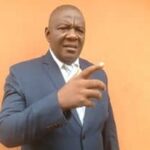
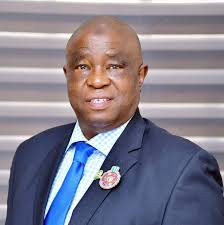
Former Deputy Commander-General of the National Drug Law Enforcement Agency (NDLEA), Sule Momodu, has called for sweeping reforms in the Nigeria Police Force, insisting that no police division should operate with fewer than 20 operational vehicles if crime is to be effectively tackled.
Speaking at a press conference in Abuja on Saturday, the retired Deputy Commandant stressed that adequate logistics are fundamental to combating crime within every division’s area of responsibility. In addition to patrol vehicles, he advocated the deployment of motorcycle, bicycle and foot patrols to enhance security coverage, particularly in hard-to-reach communities.
- Advertisement -

Momodu urged the Acting Inspector-General of Police, Olatunji Disu, to prioritise the full implementation of the amended Police Act, describing it as critical to repositioning the Force.
He maintained that proper enforcement of the Act would significantly improve police efficiency and service delivery.
Setting an agenda for the new police chief, Momodu said divisions and state commands must be adequately equipped and supported by government.
Beyond vehicles, he called for improved welfare, including the provision of sufficient uniforms and footwear for officers to ensure a professional appearance.
He also emphasised the need to strengthen radio communication systems to guarantee seamless information flow between divisional stations and state command headquarters.
He further advocated intelligence-led policing, arguing that reliance on static checkpoints and routine “show of force” operations has limited impact.
According to him, targeted intelligence gathering would enable officers to identify and apprehend criminals more effectively within their communities, rather than relying on random searches.
Congratulating Disu on his appointment, Momodu described him as a determined leader capable of transforming the Force into a more professional and people-friendly institution dedicated to maintaining law and order.
However, he stressed that tangible reforms would be the true measure of success.
He drew attention to Section 20 of the Police Act, which provides that police officers should not earn less than other better-paid law enforcement agencies in Nigeria.
He urged the Acting Inspector-General to ensure its implementation as a matter of urgency.
On the withdrawal of police personnel from VIP protection duties, Momodu advised the activation of relevant provisions of the Act that allow for the establishment of specialised “spy police” units to guard premises and VIPs.
He explained that organisations requesting such services are expected to bear the costs of recruitment, training and salaries, thereby reducing the financial burden on government while creating employment opportunities.
He noted that thousands of personnel previously attached to VIP protection could be redeployed under this framework, which he said would not only enhance efficiency but also support the Federal Government’s efforts at cost management.
Momodu also called for the activation of provisions relating to special constables to address policing gaps in underserved areas.
He recommended that the Acting Inspector-General obtain an executive summary of the Police Act from the Force’s legal department to ensure its comprehensive implementation.
In addition, he urged the reactivation of police call centres across state capitals to enable citizens report security threats promptly.
He stressed the importance of inaugurating community policing committees at local government and state levels without delay, describing them as vital links in safeguarding communities.
Finally, he called for the renovation of divisional police stations nationwide to make them conducive working environments, reiterating that adequate operational vehicles and improved infrastructure are essential for the police to effectively fulfil their statutory duty of protecting lives and property.