


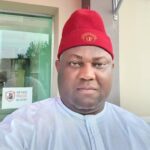




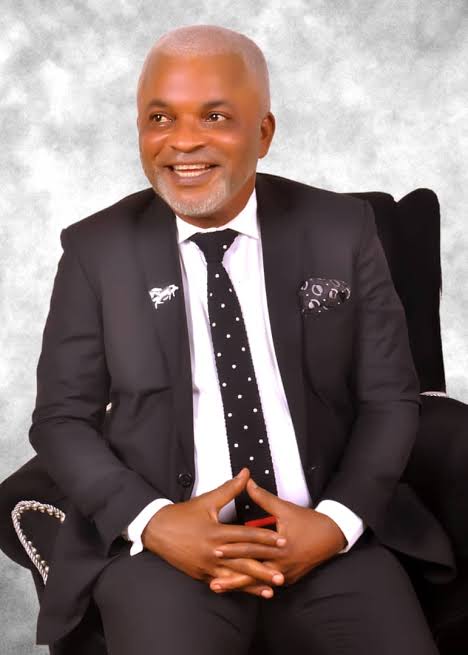
Hon. Eseme Eyiboh
Hon. Eseme Eyiboh, a former member of the House of Representatives, who represented Eket/Onna/Ibeno/Esit Eket Federal Constituency and served as the spokesperson of the House between 2007 and 2011, is currently the Special Adviser, Media/Publicity and Official Spokesperson to the President of Senate.
In this piece he shares to the members of Senate Press Corps over the weekend, he among others says Senate President Godswill Akpabio’s decision to forgive offenders and withdraw lawsuits, synthesizes developmental leadership, institutional management, obedience to God, and moral authority through public restraint. Our correspondent Ekuson Nw’Ogbunka was there. Excerpts.
- Advertisement -

During his New Year resolution, Your boss, Senate President Godswill Obot Akpabio, withdrew all his court cases and forgave those he felt offended him, what impact does this have on Nigeria’s political culture?
Well, the impact it has in Nigeria’s political culture, is that it disrupts the adversarial rhythm, lowers the temperature, and changes incentives, promoting reconciliation over hostility.
As it is now, how does this decision affect Akpabio’s institutional leadership?
But as you can see, it strengthens his moral authority, credibility, and ability to manage competing ambitions within the Senate.
As a politician of note, how does this fit Akpabio’s broader leadership narrative?
It synthesizes developmental leadership, institutional management, obedience to God, and moral authority through public restraint.
Can you briefly speak on the significance of this move for Nigeria’s future?
As you know, reconciliation isn’t a luxury; it is governance. Senate President Godswill Akpabio’s act shows restraint can be the most radical act in politics, promoting stability and trust.
Can you explain what inspired Senate President’s New Year resolution to forgive offenders and withdraw lawsuits?
The Senate President is a Christian, a devoted Catholic, and for that, It is not hidden that the Senate President’s decision was inspired by a homily at Sacred Heart Parish, Uyo, on New Year’s Day 2026, where he realized the sermon was speaking directly to him, urging him to let go of past hurts and choose peace.
Talking about Mr President’s leadership style, what on your own opinion does this decision signify?
On my own humble opinion, sincerely speaking, it reflects a leadership style that values restraint over spectacle, consensus over conquest, and nation-building over personal vendetta.
To you, how does Senate President’s faith influence his governance approach?
As I said earlier, he is a devoted Catholic, who was born into Catholic. So to that, his Catholic faith shapes his understanding of authority as entrusted with moral obligation, guiding his actions towards reconciliation and peace.
Don’t you think that this move is a sign of weakness or strength?
No! It’s a sign of strength, demonstrating that power can afford generosity and leadership doesn’t require perpetual combat.
What message would you think that this would send to critics and opponents?
The message it would send across to critics and opponents is that forgiveness doesn’t deny injury but refuses to let it define governance, and leadership can choose peace over escalation.
On your judgement, would you say that this is a strategic or sincere move?
Look, my dear brother, let us get this straight. On my judgement, I would say that It is both strategic and sincere, reflecting Akpabio’s worldview where governance, godliness, and morality intersect.
Can you tell us how this impacts national repair?
Look, let me tell you, leaders demonstrating emotional regulation contribute to national repair, addressing spiritual infrastructure decay and promoting trust.
What is your assessment of the risks Akpabio has taken with this decision?
My assessment of the risks taken by Senate President Godswill Akpabio is that forgiveness can be misread as weakness, but leadership that waits for perfect safety rarely leads.