







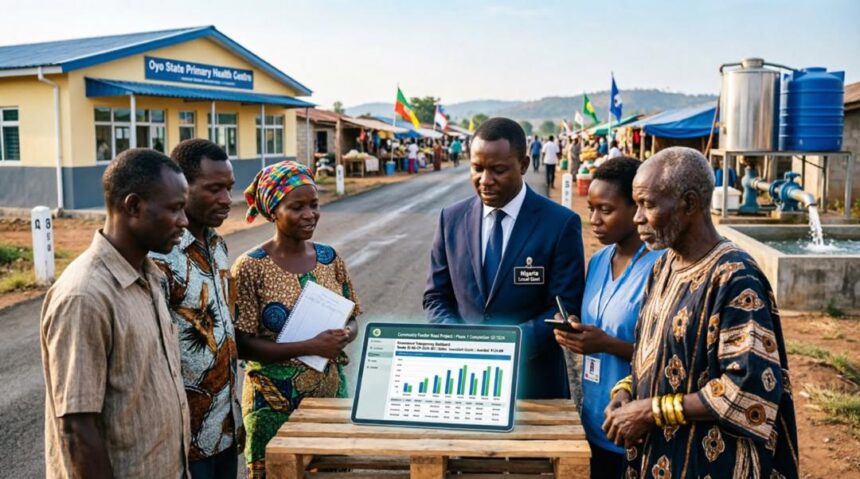
Linking FAAC Allocations, Local Government Delivery and BPP-Led Procurement Reform: Nigeria’s Procurement Reform Must Reach the Community
By Olanrewaju O. Ogunmilua (PhD), and Olanrewaju Obasa (PhD)
Public procurement is ultimately meaningful only when public expenditure produces visible improvements in the lives of citizens. For millions of Nigerians, government is not primarily experienced through the award of a major national contract or the procurement of sophisticated equipment to persons of interest in Abuja. Government is experienced through the condition of the road connecting a village to its market; the availability of water in a community; the functionality of the primary healthcare centre; the quality of the local school; drainage, sanitation and waste collection; agricultural infrastructure; rural electrification; and the small public works that determine everyday economic activity. These services are delivered principally where Nigerians live: within states, local governments, wards and communities.
This raises an important question for Nigeria’s continuing public procurement reform: If substantial public revenues are transferred every month from the Federation Account to states and local governments, should Nigeria not also develop a stronger national architecture for ensuring that a greater proportion of those resources is translated into measurable community-level development? The answer should lead Nigeria towards a new policy conversation around Community-Based Procurement (CBP). Community-Based Procurement should not mean abandoning competition, procurement law or professional standards.
Neither should it mean fragmenting public contracts merely to favour politically connected local suppliers.
The emerging Community-Based Procurement policy of the Bureau of Public Procurement, a model President Bola Tinubu has reportedly approved for implementation, represents an important shift in the philosophy of Nigeria’s public procurement system.
Credited largely to the visionary leadership of the Director-General, Dr. Adebowale Adedokun, the reform recognises that procurement should not be judged only by compliance at the centre, but ultimately by whether public expenditure produces measurable development where Nigerians actually live. Community-Based Procurement is expressly identified among the BPP’s current reform initiatives.
The Bureau has linked the approach with inclusiveness, community ownership and grassroots development, alongside complementary reforms including the Nigeria First Policy, digitalisation, professionalisation through the National Procurement Officers Management System, and end-to-end procurement management through P-COMS.
2. The Empirical Case: Follow the FAAC Money to the Grassroots
The scale of subnational public resources makes this issue economically significant.
Federation Account Allocation Committee figures for 2026 illustrate the point. For March 2026 revenue distributed in April, total distributable Federation Account revenue amounted to approximately ₦2.036 trillion.
State governments received about ₦657.596 billion, while Local Government Councils received approximately ₦468.826 billion.
For May 2026 revenue distributed in June, total distributable revenue had increased to approximately ₦2.300 trillion. States received about ₦759.141 billion, while Local Government Councils received approximately ₦534.277 billion.
By June 2026 revenue distributed in July, total distributable revenue had risen further to approximately ₦2.551 trillion. States received approximately ₦838.208 billion, while Local Government Councils received approximately ₦591.390 billion.
The trend is revealing. Across these three reported allocation months alone, states collectively received approximately ₦2.255 trillion (excluding the 13 per cent derivation shared among oil-producing states), while Local Government Councils received approximately ₦1.594 trillion.
Combined, that represents roughly ₦3.85 trillion flowing to the two tiers of government closest to communities in only three selected monthly FAAC distributions. These are not insignificant resources.
The policy question therefore cannot remain simply: How much money did states and local governments receive? The more important developmental question is: What measurable public assets and services did Nigerian communities receive from the money? This distinction should become central to the next generation of Nigeria’s public procurement reform.
3. From Revenue Allocation to Development Allocation
Nigeria possesses a sophisticated monthly system for determining and announcing how Federation Account revenues are distributed. Citizens routinely hear that hundreds of billions of naira have been allocated to states and local governments. But revenue allocation is not itself development.
Money becomes development only when it is transformed into functioning public goods and services. Between the monthly FAAC allocation and the completed community project sits an institutional mechanism that receives far less public attention: procurement. Procurement determines who builds the rural road. Procurement determines who rehabilitates the primary school.
Procurement determines who supplies medicines to the primary healthcare centre. Procurement determines who constructs boreholes, drainage channels and community markets. Procurement determines whether agricultural inputs reach farmers at reasonable prices.
Procurement determines whether solar installations work after commissioning. Procurement determines whether local businesses participate in government expenditure or whether public purchasing remains concentrated among a relatively narrow group of established contractors.
Consequently, if Nigeria wishes to understand why increased public revenue does not always translate proportionately into visible improvements in communities, it must examine the procurement systems through which those resources are converted into public assets.
4. Community-Based Procurement: A Different Development Model
International experience with Community-Driven Development provides an important conceptual foundation.
Community-based approaches allow beneficiaries to participate in identifying their own development priorities and, for appropriate categories of projects, to participate in implementation, procurement and monitoring.
This is fundamentally different from the traditional top-down model. Under the conventional approach, a distant authority may determine that a particular community requires a project.
The project is designed centrally. A contractor is selected. The contractor arrives in the community. The project is completed or sometimes abandoned. The community has limited involvement beyond receiving whatever government has decided to provide.
Community-Based Procurement reverses part of this logic. The process begins by asking: What does this community actually need? A farming community may prioritise a feeder road rather than a ceremonial building.
Another may need a borehole. Another may require rehabilitation of a primary healthcare centre. Another may prioritise a small irrigation system. Another may require a market, drainage or community nursery. Communities should not necessarily procure technically complex infrastructure themselves.
The level of community responsibility must correspond with project complexity, procurement risk and local capacity. But communities can participate in identifying priorities, validating requirements, observing procurement, monitoring implementation and confirming whether projects have actually been delivered.
For suitable small-scale projects, properly constituted community organisations can potentially assume an even greater role in implementation under simplified and transparent procurement procedures.
The principle is straightforward: Bring procurement closer to the beneficiary without weakening procurement integrity.
5. Community Procurement Is Not an Argument Against Competition
This distinction is essential. Community procurement should never become an excuse for direct allocation of public contracts to politically selected community members. Neither should the word “local” become a justification for abandoning competition. A community-based procurement system must remain transparent, competitive and auditable.
For small procurements, simplified competitive procedures can be used. Local suppliers can provide quotations.
Standard specifications can be developed. Prices can be compared against regional benchmarks. Awards can be publicly displayed. Community representatives can participate as observers.
Payments can be connected to verified milestones. Photographic and geospatial evidence can confirm project implementation. Final completion can require community validation. The objective should therefore be simplified procurement not unregulated procurement.
6. Why Local Government Should Become the Delivery Engine
Nigeria’s 774 Local Government Areas occupy a potentially transformative position within this framework. They are geographically closest to communities and therefore better positioned than distant federal institutions to understand many local infrastructure requirements.
The increasing fiscal significance of allocations to local governments makes procurement capacity at this level particularly important.
Consider the June 2026 allocation figures. Local Government Councils collectively received approximately ₦591.390 billion from the distributable Federation Account revenue for that month.
This means that strengthening local procurement is no longer a peripheral governance question. It is a major public-finance question. If even a modest portion of recurring local-government revenues is systematically directed towards competitively procured, community-prioritised infrastructure, the cumulative developmental effect could be substantial.
The challenge is ensuring that decentralisation of expenditure is accompanied by decentralisation of professional procurement capacity and accountability. Greater financial autonomy without procurement capability can simply decentralise procurement risk.
Greater financial autonomy accompanied by transparent, professional and community-accountable procurement can decentralise development. Nigeria should pursue the second path.
7. A Community Development Procurement Window
One practical reform would be for each participating local government to establish a Community Development Procurement Window within its annual procurement plan.
Rather than determining an arbitrary national percentage immediately, the framework could begin through pilots. Local governments could identify a defined envelope for low-complexity community infrastructure, linked to their fiscal capacity and development plans.
Communities would submit priorities through ward-level participatory planning. Projects would then be assessed against objective criteria including population served, economic impact, poverty reduction, urgency, existing infrastructure gaps, maintenance requirements and estimated cost. Approved projects would enter a publicly accessible procurement pipeline.
The result would be a direct conceptual chain: FAAC Revenue → Local Budget → Procurement Plan → Community Priority → Competitive Procurement → Local Delivery → Community Monitoring → Completed Public Asset. This is the chain that citizens should ultimately be able to see.
8. BPP Already Has Digital Building Blocks
The Federal procurement system is already developing platforms that demonstrate what is technically possible. BPP’s Procurement Compliance Monitoring Services (P-COMS) platform is designed to digitise procurement planning, tender processes, No-Objection requests, advertisements and compliance monitoring.
The Bureau also operates contractor-registration and procurement-officer management systems and has pursued Open Contracting Data Standard principles within its digital procurement reforms.
The next strategic question should therefore be: Can these federal innovations provide standards and interoperable architecture around which state and local procurement systems can voluntarily converge? This would be a far more transformational objective than merely digitising Federal Government procurement.
BPP could become the custodian of a National Procurement Digital Architecture. States would maintain their systems. But systems would communicate. Data standards would align. Procurement performance could become visible nationally.
9. Conclusion: Bringing Public Procurement Home to the Grassroots
Dr. Adebowale Adedokun’s Community-Based Procurement reform represents an important evolution in Nigeria’s public procurement journey.
Under the broader aspirations of the Renewed Hope Agenda, procurement is gradually moving beyond the traditional boundaries of Ministries, Departments and Agencies and closer to the communities where the impact of public expenditure is ultimately felt.
In this sense, Community-Based Procurement can finally bring public procurement home. It brings procurement closer to the farmer who needs a functional feeder road, the woman whose livelihood depends on access to a community market, the child who requires a properly equipped school, the patient who depends on a functioning primary healthcare centre, and the young entrepreneur seeking a fair opportunity to participate in government contracting.
This is also where Community-Based Procurement intersects with the wider objective of Sustainable Public Procurement.
Sustainability in procurement should not be understood only in environmental terms. It must equally embrace economic inclusion, social development, local enterprise participation, employment creation, responsible use of public resources and infrastructure capable of delivering lasting value to communities.
The significance of BPP reform therefore extends beyond decentralising procurement opportunities. Properly institutionalised, it can create a stronger relationship between public expenditure, community participation, local economic development and accountability.
The wider opportunity is for the Bureau of Public Procurement to use Community-Based Procurement as a foundation for greater national procurement harmonisation.
Federal, state and local procurement need not be centrally administered by one institution, but they can increasingly operate within common professional standards, interoperable digital systems, comparable transparency requirements and a shared commitment to sustainable public value.
Under such a framework, procurement becomes more than the process through which government awards contracts. It becomes an instrument through which public resources stimulate local businesses, create employment, strengthen communities and translate government revenue into visible development. That is perhaps the most important promise of Community-Based Procurement under the Renewed Hope Agenda: bringing procurement out of the administrative centre and into the everyday economic life of the Nigerian people.
Ultimately, the BPP Community-Based Procurement reform has the potential to redefine public procurement in Nigeria: bringing procurement home to the grassroots, converting public expenditure into measurable public value, empowering communities as partners in development, and ensuring that the Renewed Hope Agenda is judged not by the value of contracts awarded in Abuja, but by the roads built, jobs created, businesses empowered, services delivered and lives transformed across Nigeria’s communities.
An advisory note by Olanrewaju O. Ogunmilua (PhD), Olanrewaju Obasa (PhD)