




By using this site, you agree to the Privacy Policy and Terms of Use.
Accept
Times ReportersTimes Reporters
  • Home
  • News
  • Politics
  • Business
    • Economy
  • Sports
  • Entertainment
  • About Us
  • Bookmarks
Search
  • Home
  • About Us
  • Advertise
  • Join Us
  • Terms of Use
  • Privacy Policy
© 2024 Times Reporters | All Rights Reserved.
Reading: No similarities between FG’s price modulation plan and ex-VP Atiku’s subsidy restoration vow,IMPI insists
Share
Sign In
Notification Show More
Latest News
No similarities between FG’s price modulation plan and ex-VP Atiku’s subsidy restoration vow,IMPI insists
Business Metro Motoring News Oil & Gas Politics Transportation Travel/Leisure
IMPI breaks down FG’s 30-day petrol rebate, forward crude-sale plan, compares policy to Atiku’s subsidy restoration pledge
Metro Motoring News Politics Transportation Travel/Leisure
Tinubu’s local vehicle procurement directive will boost Manufacturing, create jobs — TSF
Business Metro Motoring News Politics Transportation Travel/Leisure
World Bank’s latest report reflects Nigeria’s inspiring economic reset, viable future under Tinubu -TMSG
Business Economy News Politics
Backward integration on manufacturing investment: Result of Tinubu’s economic reforms – Group
Business Economy News Politics
Aa
Times ReportersTimes Reporters
Aa
  • Home
  • News
  • Politics
  • Business
  • Sports
  • Entertainment
  • About Us
Search
  • Home
  • News
  • Politics
  • Business
  • Sports
  • Entertainment
  • About Us
Have an existing account? Sign In
Follow US
  • Home
  • About Us
  • Advertise
  • Join Us
  • Terms of Use
  • Privacy Policy
© 2024 Times Reporters | All Rights Reserved.
Times Reporters > Business > Oil & Gas > No similarities between FG’s price modulation plan and ex-VP Atiku’s subsidy restoration vow,IMPI insists
BusinessMetroMotoringNewsOil & GasPoliticsTransportationTravel/Leisure

No similarities between FG’s price modulation plan and ex-VP Atiku’s subsidy restoration vow,IMPI insists

Publisher
By Publisher Published October 20, 2026
Share
6 Min Read
SHARE


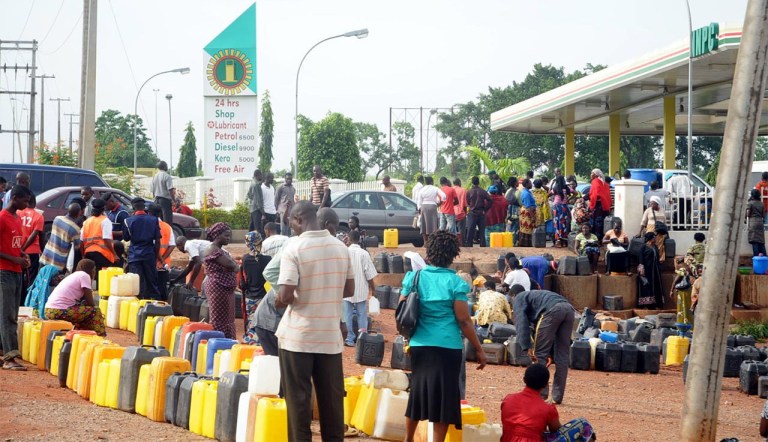
The Independent Media and Policy Initiative (IMPI) has said that there is no similarity between key measures introduced by the federal government to mitigate the effects of the Middle East conflict on fuel prices and the subsidy restoration proposal muted by former Vice President and Presidential candidate of the African Democratic Congress (ADC) Atiku Abubakar.


In a policy statement signed by its Chairman Dr Omoniyi Akinsiju, the think tank argued that neither the 30-day fuel discount at Nigerian National Petroleum Company Limited, NNPCL’s retail stations nor the price modulation plan amount to a return to the costly fuel subsidy regime.


The policy group added that there was no basis for the former Vice President to claim that the policy thrust was a ‘watered down version of his campaign promise of a budgeted production subsidy to local refineries.

‎

- NCAA -
Ad image

‎It said: Former Vice President Atiku, in his attack on the 30-day fuel price rebate policy, labelled it ‘a panic-driven stunt’ timed around political cycles. He argues that a 30-day window fails to fix structural inflation and clarify how motorists buying outside NNPCL stations will find relief.


‎”We believe this Atiku outlook is parochial and lacks a clear understanding of the policy as enunciated, even after he had earlier commended Germany’s 90-day, 17 cent fuel discount model.


‎”Our position is that the policy is an agile, data-driven intervention designed to act as a shock absorber against a severe global price spike, rather than a return to a broken subsidy system.


‎”The policy thrust is clear enough; it is not a 30-day “expiration date” but, rather, a controlled trial period. Modern macroeconomic management requires short-term, iterative policy windows to monitor market impacts on inflation, prevent immediate household panic, and track supply-chain leakages before extending or adjusting parameters. It allows the government to review maximum gantry prices dynamically.


‎”And neither is it a form of subsidy, contrary to the position of Atiku Abubakar and opponents of the policy who are insisting that the administration is ‘bringing back subsidies through the backdoor.’


‎”A traditional subsidy involves the government cutting direct checks to marketers using public funds it does not have. This discount is structurally different as it is the NNPCL simply forgoing its commercial retail profit margins to sell petrol at landing cost. No new debt is created, and the national treasury remains insulated from a multi-trillion haemorrhage that would have been incurred under the Atiku crude oil discounted model.


‎”The ₦1,350 per litre ceiling on the ex-gantry or landing cost of petrol is not a frozen price control. Instead, it functions as a dynamic month-smoothing mechanism calculated through a strict economic formula, which will be reviewed at the end of every 30 days.”


The policy group also explained in details how the two models are poles apart with no similarities.


‎”Comparing the Federal Government’s active forward sale and local currency pricing mechanism with the alternative petroleum plan proposed by Atiku Abubakar (as part of the Atiku Economic Recovery Plan, AERP), highlights two fundamentally distinct economic pathways for managing Nigeria’s downstream sector.


‎”While the current administration utilises a market-driven model, Atiku proposes a fiscally appropriated production subsidy model.


‎”In the FG model, the price mechanism is set on a market-linked forward pricing in which crude is sold to refiners based on international market benchmarks but converted at fixed naira rates or pre-negotiated landing cost targets (e.g., capping petrol around ₦1,350/litre).


“This strategy smooths out currency conversion mismatches and secures future volumes. It treats interventions as margin discounts rather than a direct budgetary expense.


‎”The opposite is the Atiku model, where the price gap is recognised as a ‘production subsidy’. The government pays the difference to refinery owners, explicitly capped and audited within the national annual budget.”


IMPI maintained that the Atiku model is capable of creating problems for the economy in the short and long term.


‎”Our analysis indicates that Atiku’s proposed model introduces a major fiscal drain disguised as industrial support. Supplying crude below its true economic value imposes a heavy opportunity cost on the Federation Account.


“Furthermore, we wonder how an administration could compel international oil companies (IOCs) and private joint-venture partners to surrender their equity crude at government-mandated discounts without triggering severe contract breaches, investor flight, or costly international arbitrations.


‎”Indeed, forcing IOCs operating in the Niger Delta to sell their joint-venture or Production Sharing Contract (PSC) oil streams at a state-mandated discount, under the Atiku model, would deeply fracture investors’ confidence.


‎”History also shows that when emerging markets impose rigid domestic price caps on extractive resources, foreign capital avoids new licensing rounds. Rather than expanding production, global operators tend to divert their deep-water exploration budgets to more market-friendly environments, leaving local fields underfunded and structurally stagnant.


“This is precisely why Nigeria failed to record Final Investment Decisions (FIDs) on new oil and gas projects in the past until the advent of the President Tinubu administration,” Akinsiju added.


Advertisement

Like this:

Like Loading…

Related

You Might Also Like

IMPI breaks down FG’s 30-day petrol rebate, forward crude-sale plan, compares policy to Atiku’s subsidy restoration pledge

Tinubu’s local vehicle procurement directive will boost Manufacturing, create jobs — TSF

World Bank’s latest report reflects Nigeria’s inspiring economic reset, viable future under Tinubu -TMSG

Backward integration on manufacturing investment: Result of Tinubu’s economic reforms – Group

Peter Obi’s refutation of World Bank’s economic growth outlook for Nigeria pedestrian-Group

TAGGED: Fuel prices modulation, Nigeria

Sign Up For Daily Newsletter

Be keep up! Get the latest breaking news delivered straight to your inbox.

By signing up, you agree to our Terms of Use and acknowledge the data practices in our Privacy Policy. You may unsubscribe at any time.
Publisher October 20, 2026
Share this Article
Facebook Twitter Whatsapp Whatsapp LinkedIn Telegram Email Copy Link Print
Share
Previous Article IMPI breaks down FG’s 30-day petrol rebate, forward crude-sale plan, compares policy to Atiku’s subsidy restoration pledge
Leave a comment Leave a comment

Leave a Reply Cancel reply

Your email address will not be published. Required fields are marked *

This site uses Akismet to reduce spam. Learn how your comment data is processed.

Stay Connected

Facebook Like
Twitter Follow
Instagram Follow
Youtube Subscribe
Telegram Follow
- Advertisement -
Ad image

– Member of –

Latest News

No similarities between FG’s price modulation plan and ex-VP Atiku’s subsidy restoration vow,IMPI insists
Business Metro Motoring News Oil & Gas Politics Transportation Travel/Leisure October 20, 2026
IMPI breaks down FG’s 30-day petrol rebate, forward crude-sale plan, compares policy to Atiku’s subsidy restoration pledge
Metro Motoring News Politics Transportation Travel/Leisure October 20, 2026
Tinubu’s local vehicle procurement directive will boost Manufacturing, create jobs — TSF
Business Metro Motoring News Politics Transportation Travel/Leisure October 20, 2026
World Bank’s latest report reflects Nigeria’s inspiring economic reset, viable future under Tinubu -TMSG
Business Economy News Politics October 20, 2026

You Might also Like

MetroMotoringNewsPoliticsTransportationTravel/Leisure

IMPI breaks down FG’s 30-day petrol rebate, forward crude-sale plan, compares policy to Atiku’s subsidy restoration pledge

October 20, 2026
BusinessMetroMotoringNewsPoliticsTransportationTravel/Leisure

Tinubu’s local vehicle procurement directive will boost Manufacturing, create jobs — TSF

October 20, 2026
BusinessEconomyNewsPolitics

World Bank’s latest report reflects Nigeria’s inspiring economic reset, viable future under Tinubu -TMSG

October 20, 2026
BusinessEconomyNewsPolitics

Backward integration on manufacturing investment: Result of Tinubu’s economic reforms – Group

October 20, 2026
Times ReportersTimes Reporters
Follow US

© 2024 Times Reporters | Deigned by AuspiceWeb Graphics. All Rights Reserved.

  • Home
  • About Us
  • Advertise
  • Join Us
  • Terms of Use
  • Privacy Policy
Join Us!

Subscribe to our newsletter and never miss our latest news!

Zero spam, Unsubscribe at any time.

Removed from reading list

Undo
Welcome Back!

Sign in to your account

Lost your password?
%d