







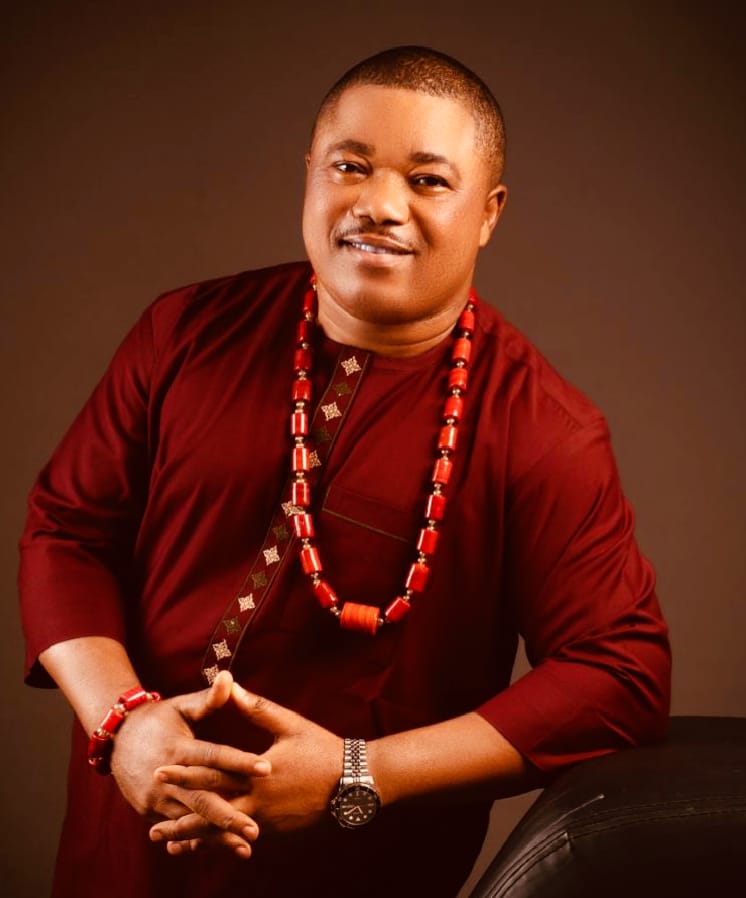
The Anambra State born human rights lawyer and lead counsel to the Indigenous People of Biafra (IPOB), Sir Ifeanyi Ejiofor, has stated that the real danger in Nigeria lies in the weaponisation of religion for political mobilisation, social exclusion, sectarian antagonism, or the intimidation of citizens who happen to hold different political or religious convictions.
The human rights lawyer, in a statement titled “WEEKEND MUSINGS: CROSSING THE RUBICON OF RELIGIOUS AND POLITICAL INCENDIARISM: THE DANGEROUS RHETORIC OF SHEIKH SANI YAHAYA JINGRI, SENATOR FRANCIS FADAHUNSI, AND THE UNEASY SILENCE OF THOSE WHO PROVIDE THE PLATFORM,” said the reported remarks attributed to Sheikh Sani Yahaya Jingri, particularly their apparent religiously divisive and exclusionary undertones, demand sober reflection and an unequivocal constitutional response.
According to him, there are moments in the life of a nation when silence ceases to be neutrality and begins to resemble acquiescence.
He noted that the reported remarks attributed to Sheikh Sani Yahaya Jingri, particularly their apparent religiously divisive and exclusionary undertones, demand sober reflection and an unequivocal constitutional response.
He said that for Nigerians who may underestimate the depth and danger of such rhetoric, the warning signs must not be ignored.
“With the 2027 general elections steadily approaching, words capable of dividing citizens along religious lines can easily be transformed into political weapons in the hands of the unscrupulous,” he said.
“However, Nigeria’s constitutional arrangement is clear. Section 10 of the Constitution of the Federal Republic of Nigeria provides that the Government of the Federation or of a State shall not adopt any religion as a State Religion. Section 42 further prohibits discrimination against any citizen on the ground of religion, among other protected grounds.
“These provisions are not decorative constitutional ornaments. They constitute the foundation upon which citizens of different faiths are expected to coexist as equal citizens under the law,” he said.
- NCAA -

He said that as the flames of Christian repudiation, allegedly kindled by the Sheikh’s incendiary rhetoric, continue to rage, Senator Francis Fadahunsi appears to have further raised the temperature of what many Nigerians may expect to witness as the 2027 general elections approach.
According to Ejiofor, to underscore the seriousness of the situation, the Osun State Police Command reportedly intervened and invited him for questioning.
This followed what has been described as a “tea-party razzmatazz” episode, during which, under the guise of an investigation, the Osun State Police Command reportedly allowed him to return home while investigations continued.
He said the people of Osun State, and indeed Nigerians generally, will ultimately be entitled to take stock of the consequences of the threats or inflammatory statements made at the twilight of an electoral contest.
Ejiofor, who holds the traditional title of Dunu-Ezeugosinachi, said what Nigerians are gradually witnessing unfold before their very eyes may be only the beginning of a far more dangerous trajectory unless the nation’s security agencies rise fully and impartially to their constitutional responsibility of protecting the peace, security, and territorial integrity of the Nigerian State.
The statement reads in parts :
“A Sheikh is entitled to preach. A Pastor is entitled to preach. A politician is entitled to speak. Every Nigerian enjoys constitutionally protected freedoms of religion, conscience and expression. But no pulpit, mosque, church, political platform or public office confers a licence to diminish the constitutional citizenship of another Nigerian, incite hatred against fellow citizens, or threaten the life and safety of persons merely because they belong to a different political, religious or ideological persuasion.
History teaches us that societies rarely plunge into serious communal conflict overnight. The process often begins with language. First comes stereotyping; then religious or ethnic labelling; thereafter, fellow citizens are portrayed as enemies; intolerance becomes normalised; and, eventually, words acquire the power to mobilise destructive action.
It is particularly important to point out that the reported presence of two serving Governors at the gathering where these sentiments were expressed by Sheikh is equally deserving of sober reflection. Public officials must appreciate that their presence at a gathering can sometimes confer unintended legitimacy, credibility or political weight upon the platform and, by extension, upon messages conveyed there.
The Federal Government and the relevant security agencies must not wait until inflammatory words metamorphose into inflammatory actions. The appropriate authorities should carefully examine the statements attributed to the individuals concerned, their precise context, intended audience, surrounding circumstances and potential consequences, and determine, strictly in accordance with the law, whether any criminal or other actionable offence has been disclosed.
There is an old and rather unforgiving lesson: one cannot continually pour kerosene around a house and then pretend surprise when somebody eventually strikes a match.
Those entrusted with the responsibility of maintaining public order must therefore act with vigilance, impartiality and courage. The law must apply equally, irrespective of the status, religion, political affiliation or influence of the person involved. Selective enforcement of the law is itself capable of undermining public confidence and emboldening those who believe that power provides immunity.
The time for vigilance is now, not after the damage has been done.
The time for constitutional fidelity is now, not when the country is already engulfed in avoidable crisis.
Nigeria is a constitutional republic in which every citizen is entitled to equal dignity, equal protection and equal citizenship, regardless of faith, ethnicity, political affiliation or social standing.
That principle must remain inviolable”.