







…Experts warn bouillon cube fortification could worsen Nigeria’s hypertension crisis
By Chidi Ugwu
A coalition of health experts and civil society groups on Wednesday called on the Federal Government to halt plans to use ultra-processed foods as vehicles for nationwide nutrient fortification, warning the move could deepen Nigeria’s hypertension and cardiovascular disease burden.
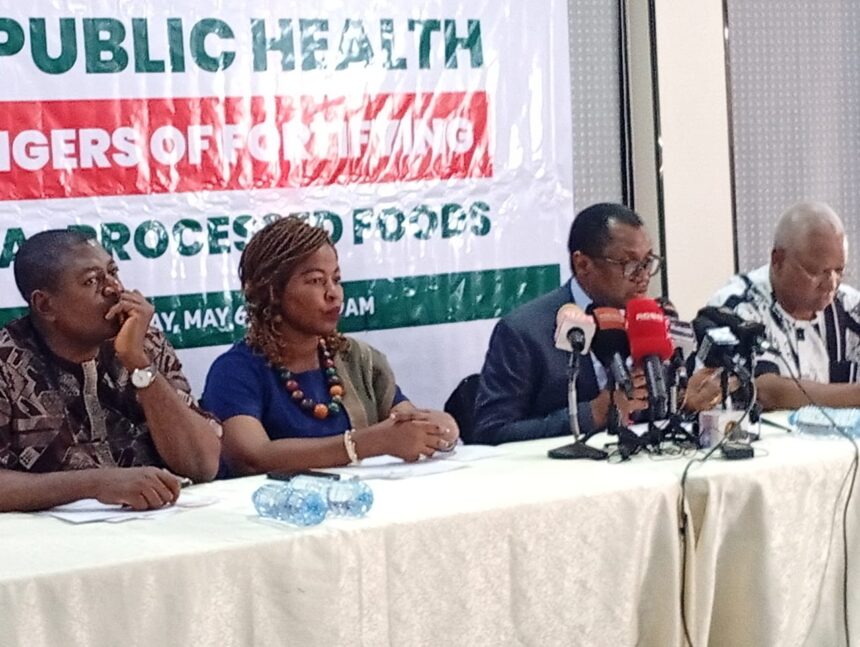
The call was made at a press briefing in Abuja themed ‘Addressing the Use of Ultra-Processed Foods as Vehicles for Food Fortification in Nigeria’, organised by Corporate Accountability and Public Participation Africa (CAPPA).
Delivering a statement, Prof Dike Ojji of the College of Health Sciences, University of Abuja, said cardiovascular diseases, including heart attack, heart failure, and stroke, now account for 10 to 11 percent of annual deaths in Nigeria. They represent 20 to 30 percent of medical ward admissions and 30 to 35 percent of hospital mortality.
Hypertension affects 25 to 30 percent of Nigerians and is the primary risk factor for CVD, Prof Ojji said. He noted that over 29 percent of hypertensive Nigerians are unaware of their condition, while only 12 percent of those treated achieve blood pressure control.
A study by the Nigeria Sodium Study Team found Nigerians consume an average of 3.8g of sodium daily, nearly double the World Health Organization’s recommended 2.0g limit. Prof Ojji linked the rise in obesity, diabetes, and high cholesterol to “excess caloric intake paired with physical inactivity,” with many calories coming from ultra-processed foods such as sugary sodas, instant noodles, packaged snacks, and processed meats.
- NCAA -

“A fortified cube is a high-sodium risk”
Dr. Jerome Mafeni, who also spoke at the briefing, described Nigeria as being at a “critical point” where rising sodium consumption, ultra-processed food reliance, and fortification plans intersect.
He said bouillon cubes, now being considered for fortification with iron and zinc, are used daily across households and contribute significantly to sodium intake. Fortifying them, he argued, creates a “health halo effect” that could lead consumers to view the product as healthy and increase use.
“We are taking a product that contributes significantly to excess salt intake and beginning to position it as part of the nutrition solution. This creates a fundamental contradiction,” Dr. Mafeni said. “Adding micronutrients to a high-sodium product does not remove its core health risk.”
He urged government to first implement mandatory salt targets, front-of-pack warning labels, and stronger enforcement before considering bouillon fortification. “We must not solve one public health problem by creating another,” he added.
CAPPA Executive Director Akinbode Oluwafemi said the coalition supports food fortification “when properly designed,” but faulted the delivery of micronutrients through seasoning cubes, instant noodles, sugar-sweetened cereals, and refined flours.
Nigeria faces a “triple burden” of undernutrition, micronutrient deficiencies, and rising diet-related non-communicable diseases, he said. Obesity affects about 16 percent of women and 6 percent of men, while diabetes prevalence is approaching 8 percent.
“Fortifying ultra-processed foods creates a health halo. It gives consumers the impression that these products are healthy, even when they are high in salt, sugar, and unhealthy fats,” Oluwafemi said. He added that UPFs lack the fibre and protective compounds in indigenous diets and that processing alters food structure in ways linked to metabolic stress.
He further warned that industrial fortification programmes tend to favour multinational corporations while sidelining smallholder farmers who grow nutrient-rich local crops.
The coalition urged the Federal Ministry of Health and Social Welfare, NAFDAC, and the Standards Organisation of Nigeria to review the current fortification strategy.
Among its recommendations: “Prioritise sodium reduction to meet Nigeria’s goal of cutting intake by 30 percent; Avoid UPFs as fortification vehicles if they increase salt, sugar, or unhealthy fat intake; Introduce front-of-pack warning labels on fortified ultra-processed foods and restrict misleading “fortified with…” claims on products exceeding safe thresholds; Prioritise biofortification of staples such as Vitamin A cassava, orange-fleshed sweet potatoes, and zinc-enriched maize; Redirect incentives to smallholder farmers producing indigenous foods; and Strengthen fiscal measures, including taxes on sugar-sweetened beverages, with revenue supporting nutrition programmes.
Prof Ojji said structured policies are essential to protect Nigerians from excessive salt, trans-fats, and ultra-processed foods. “Nigeria cannot supplement its way out of a poor diet,” Oluwafemi said.
The briefing comes as Nigeria prepares to implement the National Policy on Food and Nutrition (2026–2035).