







By Our Reporter in Abuja
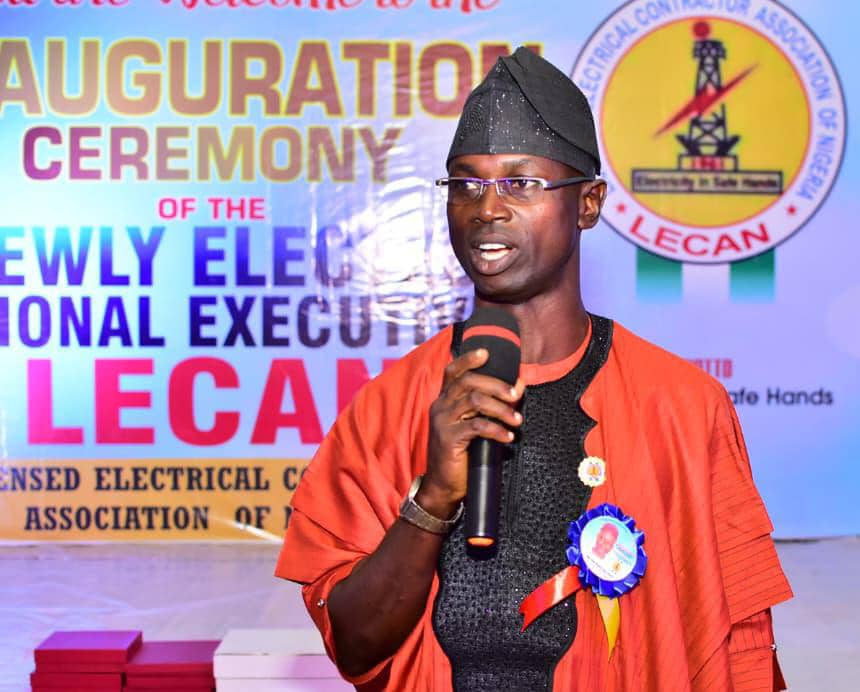
The South-South Zone of Nigeria continues to grapple with epileptic power supply, outrageous estimated billing, and rising cases of energy theft, despite federal government efforts to deploy free prepaid meters. The National Coordinator of the Licensed Electrical Contractor Association of Nigeria, (LECAN) in the Zone, Engineer Philip Ewesor, has warned that unless urgent reforms are made, the electricity crisis in the zone will worsen.
Speaking in an exclusive interview, Ewesor said the region, which is covered by two major Distribution Companies, DISCOs, is suffering from a severe shortage of meters and distribution transformers.
“Consumers suffer from non-availability of meters, thereby making people pay exorbitantly. This frustration has led many to attempt stealing energy,” he said. He, however, noted that the Federal Government’s free meter rollout under the Presidential Metering Initiative has begun to bring some relief, with installations currently ongoing across communities.
On infrastructure, Ewesor lamented that distribution transformers in the South are very limited. “Where transformers are limited, you will always have the usual occurrence of overload. It leads to constant tripping and eventual failure. Some communities stay in darkness for months because of one overloaded transformer,” he explained.
He accused DISCOs of not following the rules of the Nigerian Electricity Supply Industry, NESI. According to him, NESI mandates that before any new house is connected to the grid, Form 74 must be filled and endorsed by a certified electrician who is a member of LECAN.
“That certification makes it legal tender to be processed with the distribution company. But most DISCOs bypass this process. They just go and capture customers,” he alleged.
- NCAA -

A major challenge, Ewesor said, is the non-gazetting of LECAN by the Federal Government. He compared the association to the Nigerian Bar Association, NBA, and Nigerian Medical Association, NMA, which enjoy legal backing to regulate their professions.
“If LECAN is gazetted, we will leave no stone unturned to introduce the expected improvement in the electricity industry for the benefit of all. LECAN was established in 1961. We are almost 65 years old. We deserve legal recognition,” he stated.
Ewesor also condemned the practice of “customer capturing” by some DISCOs. “They capture a customer without agreement, put them in the system, and start giving outrageous estimated bills. After one month, the customer cannot pay again because the bill is not reflective of consumption.”
He said this is what is fueling energy theft. “When you drive around, you see people hanging wires between lines. That illegal connection can pack up one or two phases of a transformer. But if those people are properly registered and metered, this problem will reduce.”
On whether DISCOs, formerly NEPA, are doing enough, he answered “to an extent, no.” He said they are too focused on revenue and not maintenance. “Drive around and you will see their substations are bushy and not protected. Vandals hide there to cut cables. Maintenance is the key.”
He cited the case of communities that want to donate transformers. “Instead of encouraging them, DISCOs make the process so rigorous. They will say clear all outstanding debts first. But if you connect the relief transformer, the community will pay because they now see value for their money.”
Ewesor said LECAN has reported these issues to the House of Representatives Committee on Power and to the Nigerian Electricity Management Services Agency, NEMSA. He urged the Federal Government to gazette LECAN immediately to help checkmate irregularities and standardize electrical works across the country.