






By Chidiebere Ugwu
Traditional rulers of communities hosting the National Parks in Osun State have urged the Federal Government to reserve 70 per cent of employment opportunities generated by the park for qualified indigenes, alongside urgent boundary demarcation to prevent land disputes.
The monarchs said the park’s elevation to national park status should translate into tangible benefits for host communities through employment, skills acquisition, youth engagement and development initiatives.
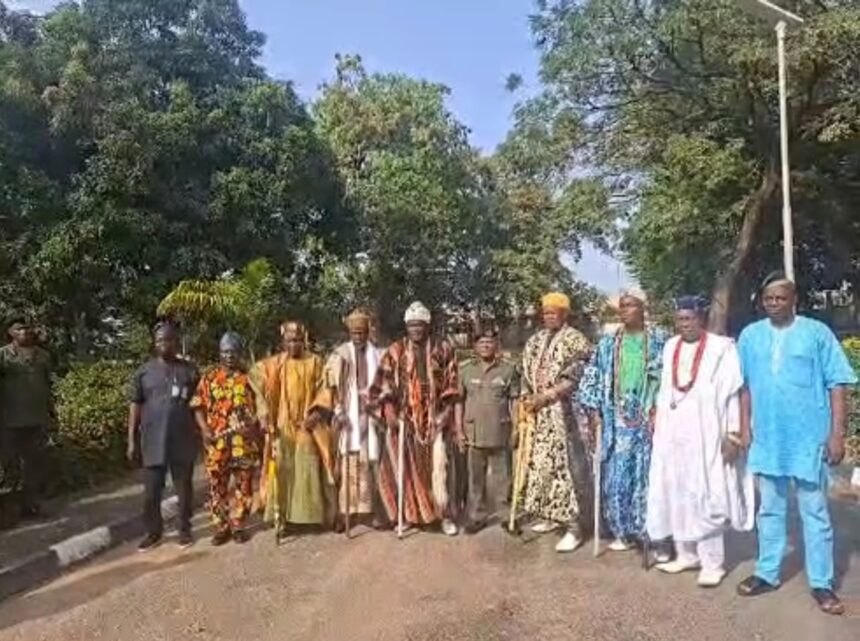
They made the demands during a courtesy visit to the Conservator-General of the National Park Service at the service’s headquarters in Abuja on Wednesday, in an address delivered by the Secretary of the Oba Hill Traditional Council, Mr Shedrack Adebayo Adelakun.
The traditional rulers said prioritising local employment and community development would strengthen public support for conservation, improve livelihoods and sustain peaceful relations between the park authorities and residents.
They specifically urged the government to ensure that 70 per cent of employment opportunities arising from the park’s operations went to indigenes of the host communities, while qualified local residents should also be considered for training, restoration activities and other legitimate opportunities.
The Olu of Akinleye Town, Oba Hill, Osun State, Oba Nafiu Abiodun Taofeek, said unemployment among youths remained a major concern, noting that some graduates and holders of higher qualifications had been compelled to take up farming because of limited job opportunities.
“When jobs come, help our boys to have the opportunity to work,” the monarch appealed, stressing that employment would make young people productive and encourage stronger community support for the park.
Oba Taofeek acknowledged that residents initially expressed concerns about the establishment of the park, particularly fears that they could lose access to their land and suffer disruptions to their farming activities.
He, however, said engagement by park officials had helped address some of the concerns, improve residents’ understanding of the park’s purpose and promote appreciation of its potential security benefits.
The monarch commended the park management for maintaining cordial relations with traditional rulers and community members, but stressed that sustained cooperation would require practical benefits for the people.
He also called for the establishment of an office in the community to facilitate communication between residents and park officials, while appealing for broader Federal Government assistance to support development in the area.
Beyond employment, the traditional council urged the authorities to urgently demarcate the park’s boundaries and, where necessary, clearly indicate internal boundaries to prevent misunderstandings and land-related disputes.
The rulers expressed particular concern over reports that some miners had shown interest in mining around Akinleye Town, saying clear boundary identification was necessary to avert potential conflicts.
They also sought clarification on an earlier concern about the destruction of existing exotic trees, recalling that a committee that visited the communities had promised to examine the matter.
The council further requested that traditional institutions in the host communities be considered in budgetary provisions, although it did not specify the proposed allocations.
Despite the concerns, the traditional rulers welcomed the park’s ecological restoration programme, particularly the mobilisation and planting of 11,000 indigenous seedlings with contributions from FR2N, IHS Towers and Polaris Bank, facilitated through the Nigerian Conservation Foundation.
They said the initiative could help restore degraded vegetation, protect soil and water sources, improve wildlife habitats and strengthen environmental resilience against climate change.
The rulers urged the Park Service to sustain efforts to ensure the seedlings survive, including protection against bush fires and grazing, regular maintenance and long-term monitoring of restored areas.
They also advocated appropriate agroforestry practices and active participation by local residents, arguing that community involvement would encourage ownership and improve protection of the park’s natural resources.
The council commended the Acting Conservator of Parks, DOP A. Claurie Kasem, and his team for their cooperation with host communities, while calling for regular consultations among park management, traditional rulers, community representatives and other stakeholders.
It pledged that traditional institutions would help maintain peace, resolve local disputes, mobilise community support and discourage illegal activities capable of threatening wildlife and vegetation.
The monarchs also called on the Federal Government to provide adequate technical support, personnel and operational resources to enable the park to fulfil its conservation mandate.
They maintained that the long-term success of Oba Hills National Park would depend on effective management, sustained government support and the confidence of communities whose livelihoods and ancestral connections are tied to the surrounding landscape.
The traditional rulers expressed optimism that a partnership combining environmental protection with employment and development opportunities could make the park a model of community-supported conservation in southwestern Nigeria.