







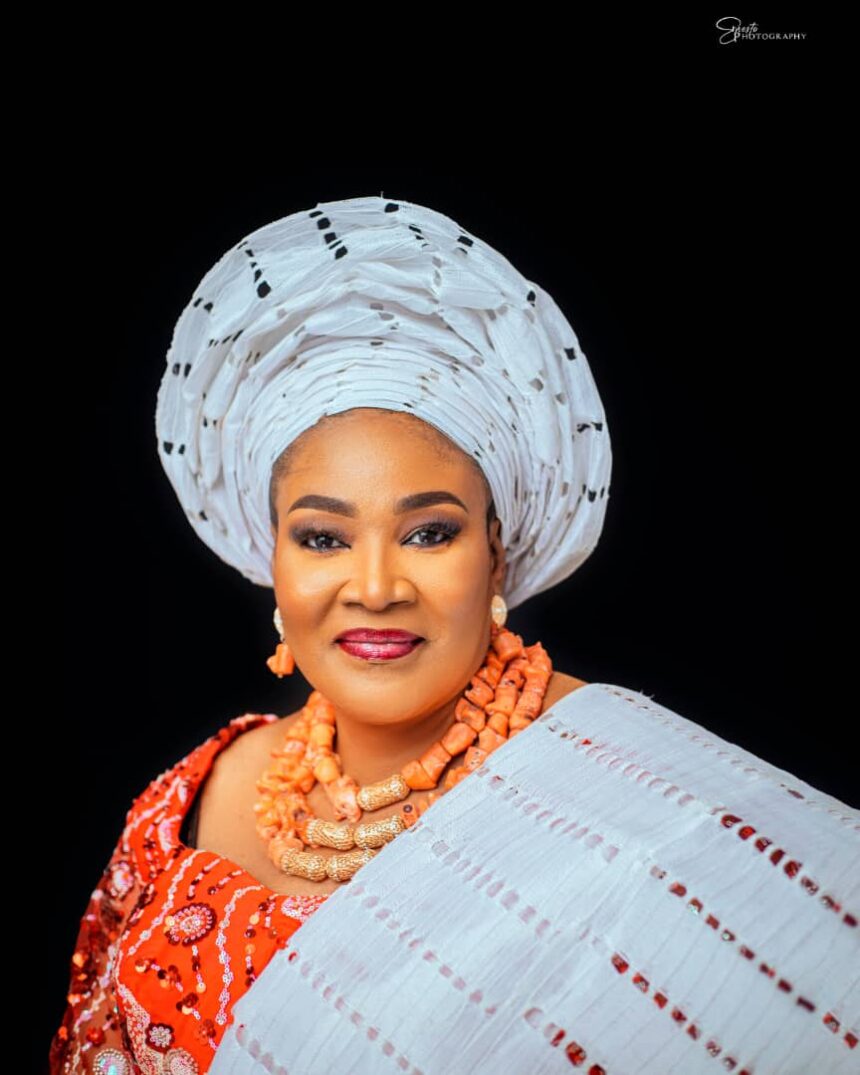
The Peoples Redemption Party (PRP) FCT Senatorial Candidate, Dr Juliet Hasana-Moneme, has pledged to make skills acquisition, economic empowerment and access to credit facilities key priorities for women in the Federal Capital Territory if elected to the Senate.
Moneme made the commitment during a media engagement organised by the League of Anambra Journalists in Abuja (LAJA), where she outlined her vision for inclusive and sustainable development across the FCT.
She said women across the six Area Councils of the FCT would be able to hold her accountable for delivering on the commitments.
 Group picture of LAJA members with Dr. Juliet Hasana -Moneme middle
“Every woman in the FCT should hold me accountable for women skills acquisition, for women empowerment, and for women access to credit facilities or grants that are available in the city,” she said.
According to her, effective empowerment requires proper identification of the people and communities in need. She therefore proposed the establishment of a structured database covering the FCT’s six Area Councils, wards and communities.
Moneme explained that such a database would provide reliable information on the needs, skills and circumstances of residents and enable government and relevant stakeholders to connect them with available opportunities, including education, credit facilities, grants and other support programmes.
The senatorial candidate also promised to advocate for constituency empowerment programmes that would create lasting economic opportunities rather than serve as one-off distribution of materials or cash.
- NCAA -

Drawing from her previous community initiatives, she said she favoured a revolving-fund model, under which beneficiaries would receive financial support, repay it under agreed terms and thereby make the same pool of funds available to other beneficiaries.
Moneme said her experience working with women and young people had reinforced her belief that sustainable empowerment goes beyond simply giving people money.
She stressed that the objective should be to identify people’s abilities, provide them with the necessary skills and connect them to resources, markets and opportunities that can enable them to build sustainable livelihoods.
She further called for greater collaboration among government institutions, community leaders, civil society organisations and development partners to ensure that women and young people in the FCT are not left behind in economic development.
Moneme reaffirmed her commitment to representing the interests of residents of the FCT with accountability, inclusiveness and practical programmes that can produce measurable improvements in people’s lives.