






BY PEACE ANTHONY MAI
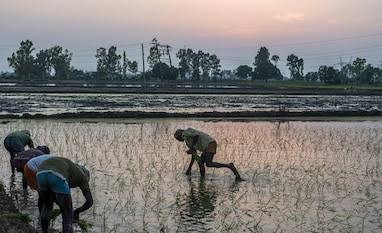
Northern Nigeria, largely dependent on agriculture as its primary source of livelihood, is facing significant challenges as climate change intensifies.
The region’s agriculture, which supports millions of farmers, is increasingly threatened by irregular weather patterns, prolonged droughts, flooding, and desertification.
These environmental changes are contributing to food insecurity, poverty, and displacement, particularly in the northern states that rely heavily on farming and livestock for their economic survival.
Climate change has exacerbated the already fragile agricultural conditions in northern Nigeria.
The region has been experiencing unpredictable rainfall patterns, with some years marked by droughts, while others witness devastating floods.
These shifts in weather have made farming more difficult, as crops fail or are destroyed by erratic weather.
For small holder farmers, who make up the majority of agricultural producers, the consequences are dire, as they lack the resources to adapt to changing conditions or recover from losses.
One of the most significant effects of climate change in northern Nigeria is desertification, particularly in the northeast.
The encroachment of the Sahara Desert, driven by reduced rainfall and increased temperatures, is threatening agricultural land and water sources.
As fertile lands turn to desert, farmers are forced to migrate in search of arable land, often contributing to conflicts over resources with neighboring communities.
This environmental degradation is leading to an increasing number of internally displaced persons (IDPs), many of whom are farmers whose livelihoods have been destroyed by desertification.
In addition to desertification, northern Nigeria is also grappling with land degradation caused by deforestation, poor farming practices, and overgrazing.
The loss of forest cover reduces the region’s ability to capture rainwater, making it harder for farmers to grow crops and raise livestock.
Soil erosion further worsens the situation, leaving the land infertile and less productive.
These environmental changes have a cascading effect on food production, as well as on the broader economy, which is heavily reliant on agriculture.
Livestock farmers are also affected by climate change, with rising temperatures and decreasing water availability threatening the health of cattle, sheep, and goats.
The depletion of grazing lands forces herders to move their animals over longer distances, leading to conflicts with farming communities and among different ethnic groups.
The competition for increasingly scarce resources, such as water and grazing land, has fueled violent clashes between pastoralists and farmers, further destabilizing the region.
The impact of climate change on agriculture in northern Nigeria has contributed to a rise in food insecurity.
With reduced agricultural output, the availability of staple crops like millet, sorghum, and maize is decreasing, leading to higher food prices and limited access to nutritious food.
In rural areas, where agriculture is the primary means of livelihood, families are struggling to feed themselves, while malnutrition rates are rising.
This has further compounded existing socio-economic challenges, making it harder for vulnerable communities to break free from the cycle of poverty.
Addressing the impact of climate change on agriculture in northern Nigeria requires urgent action.
First, there is a need to invest in sustainable farming practices, such as crop diversification, agroforestry, and water conservation techniques, which can help farmers adapt to changing weather conditions.
Providing training and resources to farmers on climate-smart agriculture can improve their resilience and productivity.
Additionally, improving the management of natural resources, such as water and land, is critical to mitigating the effects of climate change.
Implementing water harvesting techniques, improving irrigation systems, and promoting reforestation efforts can help restore degraded lands and protect vital water resources.
Strengthening policies that promote environmental conservation and encourage sustainable land use practices is also essential.
Furthermore, it is crucial to provide financial support and insurance schemes for farmers, especially those in vulnerable areas, to help them recover from climate-induced disasters.
These measures can reduce the financial burden on farmers when crops fail or livestock are lost to environmental factors.
Lastly, addressing the root causes of conflict between farmers and pastoralists requires better resource management and conflict resolution mechanisms.
Creating grazing reserves and providing alternative livelihoods for herders can reduce the strain on agricultural lands and water sources, decreasing tensions and violence.
Northern Nigeria’s agricultural sector faces unprecedented challenges due to climate change, but with proactive policies and investments in sustainable agriculture, the region can mitigate some of the worst impacts.
By strengthening resilience, promoting environmental conservation, and fostering collaboration between communities, northern Nigeria can begin to adapt to the changing climate and secure its agricultural future.
PEACE ANTHONY MAI IS A 300 LEVEL STUDENT FROM MASS COMMUNICATION DEPARTMENT BORNO STATE UNIVERSITY, BORNO STATE