





Aleke Aleke in Abuja
The Chief of Naval Staff (CNS), Vice Admiral Idi Abbas, has said the Nigerian Navy served as the logistics and combat backbone of ECOMOG operations in Liberia and Sierra Leone, playing a pivotal role in troop deployment, maritime security and regional peace support operations during the conflicts in both West African countries.
Speaking at a press conference in Abuja, the CNS said the Nigerian Navy has, over the decades, remained a formidable force in promoting peace and stability at the global, regional and national levels through several peacekeeping and intervention missions.
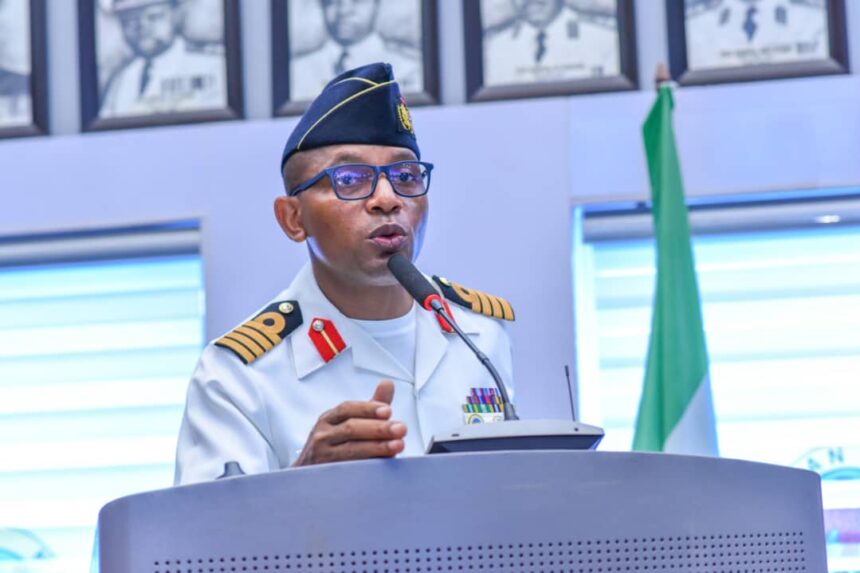
Represented by the Chief of Policy and Plans at Naval Headquarters, Rear Admiral Akinola Olodude, Abbas highlighted the Navy’s contributions to international peace support operations, beginning with its involvement in the United Nations Mission in Lebanon in the 1970s.
“Notably, during the United Nations Mission in Lebanon in the 1970s, the Navy supported the United Nations Interim Force in Lebanon. It navigated the Mediterranean Sea to deliver vital medical supplies and logistical support to the Nigerian Army peacekeeping forces deployed in Southern Lebanon,” he said.
The CNS noted that the Navy played a central role during the ECOMOG intervention in Liberia between 1990 and 1999 by providing strategic sealift, combat support and humanitarian assistance.
“During the ECOMOG Intervention in Liberia from 1990 to 1999, the Nigerian Navy served as the logistical and combat backbone of the entire sub-regional effort.
- NCAA -

“It enforced strict maritime embargoes, provided critical naval gunfire support, and conducted humanitarian operations that saved thousands of civilian lives. It also conducted sealift operations that safely transported thousands of regional troops and heavy military hardware.”
He added that the Navy also played a decisive role during the ECOMOG operations in Sierra Leone from 1997 to 2000 by supporting efforts to restore democratic governance in the country.
“Likewise, during the ECOMOG Operations in Sierra Leone between 1997 and 2000, the Nigerian Navy played a decisive role in restoring the democratically elected government by enforcing United Nations and ECOWAS maritime embargoes against insurgent forces. It executed vital strategic sealifts, maintained combat patrols, secured Freetown Harbour and ensured the unimpeded supply of humanitarian aid,” he stated.
The CNS further disclosed that the Navy participated in the 2017 ECOWAS Mission in The Gambia, where it deployed Special Forces and offshore patrol vessels to support the peaceful restoration of constitutional order.
“Furthermore, in 2017, the Nigerian Navy participated in the ECOWAS Mission in The Gambia where a regional military stabilisation force was deployed. The Navy deployed its Special Forces – Nigerian Navy Special Boat Services and Offshore Patrol Vessel – towards ensuring the swift and peaceful restoration of constitutional governance in The Gambia.
“Equally, the ECOWAS Stabilisation Mission in Guinea-Bissau in 2022 provided the Nigerian Navy with another opportunity to successfully project Nigeria’s strategic sealift capability by transporting military battalions, heavy tactical vehicles and vital hardware to stabilise the country following an attempted coup,” he added.
According to him, these operations contributed to the Strategic Sealift Memorandum of Understanding signed between Nigeria and the African Union in 2025, under which the Nigerian Navy would provide sealift capacity to support peacekeeping operations, disaster response and personnel movement across the continent.
On the domestic front, the CNS said the Nigerian Navy’s operations had helped Nigeria remain off the International Maritime Bureau’s list of piracy-prone nations since 2022, with positive implications for shipping, trade and insurance costs.
“Regarding shipping, the Nigerian Navy Hydrographic Office over the years has facilitated safe navigation in Nigeria’s maritime environment through charting of various areas such as Lagos Harbour, Calabar Channel, Igbokoda and Oguta Lake to the Atlantic Ocean among several others,” he concluded.