







By Ekuson Nw’Ogbunka,Abuja
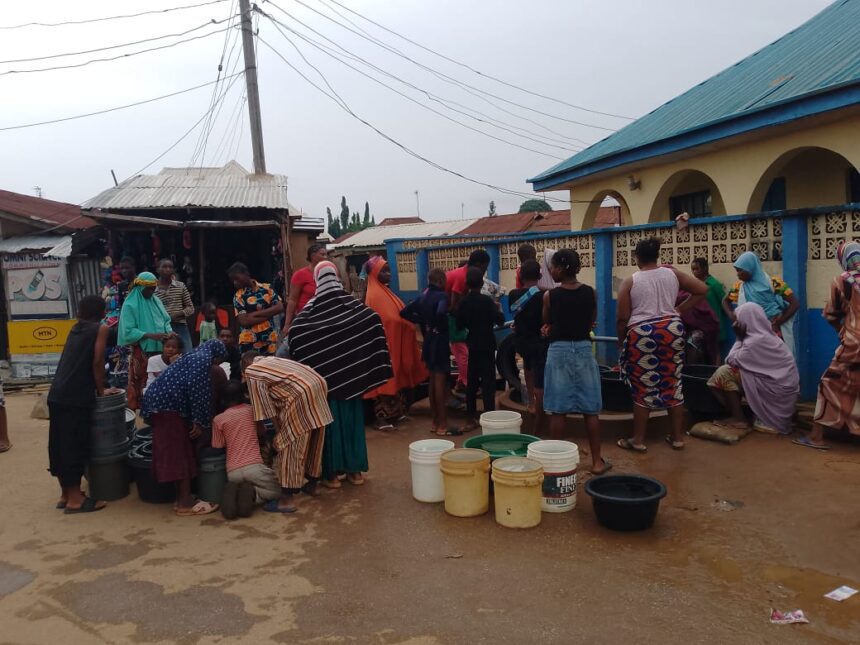
Residents of Karmo and Idu, host communities of the Idu Industrial Area in the Federal Capital Territory, have been grappling with acute water scarcity for about a week. The shortage has disrupted daily life and raised concerns over public health and sanitation in the affected areas.
According to reports from the ground on Saturday, pipe-borne water supply to both communities has been completely cut off, leaving households without access to the main water network. The disruption has forced residents to seek alternative sources at higher cost.
The situation has created a sharp divide between residents with private boreholes and those without. Only households with boreholes are able to access water consistently, while others are left to buy from vendors or trek long distances to fetch water.
Community members say the high cost of water from vendors has added to the financial strain already caused by rising living expenses in Abuja. “A 25-litre jerrycan that used to sell for ₦50 now goes for ₦150 to ₦200. We can’t keep paying this every day,” said Musa Ibrahim, a Karmo resident.
The scarcity is particularly felt in Karmo, where population density is higher and dependence on public water supply is greater. Traders, small businesses, and residents in the area say operations have been hampered due to the lack of water.
Idu, which hosts a major industrial hub, is also affected despite its proximity to the industrial area. Residents argue that hosting the industrial zone has not translated into improved basic amenities, including reliable water supply.
- NCAA -

Efforts to get an official response from the FCT Water Board on the cause of the outage and when supply will be restored were unsuccessful as of press time. Residents say they have received no communication on the disruption.
With no clear timeline for resolution, residents are calling on the FCT Administration to urgently intervene and restore water supply to prevent a public health crisis. They warn that prolonged scarcity could worsen sanitation and increase the risk of waterborne diseases in the communities.